The Hidden Costs of Investment Property Financing: What Every Real Estate Investor Needs to Know
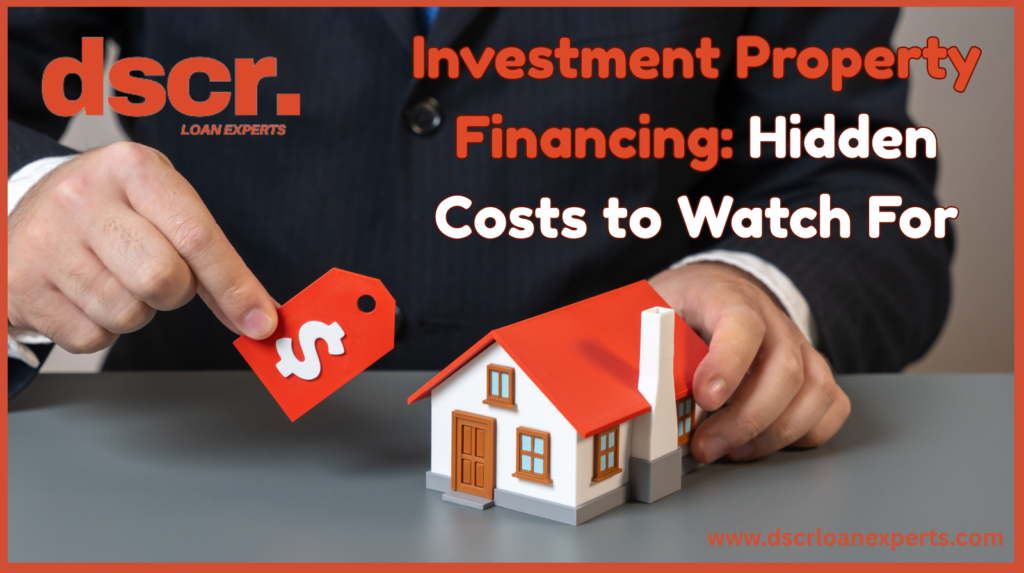
Investment property financing looks straightforward on the surface. A down payment, a mortgage, some closing costs — done. But seasoned real estate investors know that the financial picture is far more complex, layered with costs that rarely show up in the initial conversation with a lender. These hidden expenses have a quiet, persistent way of compressing profit margins, disrupting cash flow projections, and turning what appeared to be a solid deal into a financially stressful situation.
Understanding the full cost structure of investment property financing is not just smart — it is essential for long-term success in real estate investing. This guide breaks down those costs with clarity, honesty, and the kind of practical insight that helps investors make decisions with confidence.
Why Investment Property Financing Is More Expensive Than It Appears
There is a significant difference between financing a primary residence and financing an investment property. Lenders view investment properties as higher-risk assets, meaning borrowers typically face stricter qualification requirements, higher interest rates, and a broader range of fees. What catches many investors off guard is not the obvious difference in interest rates — it is the cumulative weight of smaller costs that add up quickly.
👉 What Is a DSCR Loan? A Quick Guide for Investors
Picture this scenario: an investor finds a promising rental property, runs the numbers based on the quoted interest rate, and feels confident about the projected returns. Then, as closing approaches, a series of additional costs begin to surface — loan origination fees, appraisal premiums, higher insurance requirements, and reserve account demands. Suddenly, the financial model looks very different from what was initially planned.
This is not an unusual experience. It is, in fact, one of the most common financial surprises in real estate investment.
The Major Hidden Costs to Watch For
1. Loan Origination Fees and Points
Most lenders charge origination fees — typically expressed as a percentage of the loan amount — to process and underwrite the loan. For investment properties, these fees can be notably higher than those on primary residence loans. Additionally, many investors choose to pay “points” to buy down their interest rate, which can make sense in certain scenarios but adds a substantial upfront cost that must be factored into the overall investment analysis.
The key insight here is that a lower interest rate does not always mean a lower overall cost of financing. The breakeven timeline on paying points must align with the investor’s hold strategy for the math to work in their favor.
2. Higher Down Payment Requirements
While primary residence mortgages can sometimes be secured with as little as three to five percent down, investment property loans typically require a minimum of twenty to twenty-five percent, and in some cases even more depending on the property type and the borrower’s financial profile. This is capital that is immediately locked into the property, reducing liquidity and increasing the risk profile of the overall portfolio.
For investors using leverage as a growth strategy, this higher capital requirement has a direct impact on how quickly they can scale their portfolio.
3. Appraisal Fees and Required Re-Appraisals
Investment property appraisals are generally more complex and therefore more expensive than residential appraisals. Lenders may also require specialized appraisals such as rent schedules or income approach valuations, which come with their own costs. In some cases, if the property does not appraise at the expected value, a second appraisal may be required — compounding the expense.
4. Insurance Premiums Beyond Basic Coverage
Investment properties require landlord insurance rather than standard homeowners insurance, and this distinction matters significantly from a cost perspective. Landlord policies typically cost more and are structured differently. Depending on the property’s location, additional coverage — such as flood insurance, earthquake insurance, or umbrella liability policies — may be required by the lender or strongly advisable from a risk management standpoint.
When a property sits vacant between tenants, some policies either lapse in coverage or require a separate vacancy endorsement, which is an additional expense many investors overlook until it becomes a problem.
5. Prepayment Penalties
Some investment property loans — particularly certain commercial and non-QM loan products — include prepayment penalties that can be triggered if the loan is paid off or refinanced within a specific timeframe. These penalties can be structured in various ways, and in some cases they represent a significant financial obstacle when market conditions shift and refinancing becomes desirable.
Reading the fine print on prepayment structures before signing is not optional — it is critical.
6. Reserve Requirements
Many lenders require investment property borrowers to maintain a certain number of months’ worth of mortgage payments in liquid reserves. These reserves are not a cost in the traditional sense — the money does not leave the investor’s account — but they do reduce the capital available for other investments, effectively carrying an opportunity cost that should be calculated as part of the overall financing picture.
7. Property Management Fees
While not a direct financing cost, property management fees directly interact with the cash flow calculations that determine whether a financed investment property is profitable. Depending on the management structure and local market rates, these fees can represent a meaningful percentage of gross rental income — and they must be accounted for in any realistic financial model.
8. Tax Implications of Financing Structures
The way an investment property is financed can have significant tax implications that affect the net return on the investment. Depreciation, mortgage interest deductions, and the classification of expenses all interact with financing decisions. Without proper tax planning, investors can unknowingly structure financing in ways that reduce their after-tax returns.
The Rising Relevance of DSCR Loans in Investment Property Financing
One of the most significant developments in investment property financing in recent years has been the growing popularity of Debt Service Coverage Ratio (DSCR) loans.
👉 Can First-Time Investors Use DSCR Loans?
Traditional mortgage qualification relies heavily on the borrower’s personal income, employment history, and tax returns. DSCR loans instead focus on property cash flow.
Common Mistakes Investors Make When Calculating Financing Costs
Several patterns of thinking consistently lead investors to underestimate the true cost of financing an investment property. Awareness of these patterns is the first step toward avoiding them.
Focusing exclusively on the interest rate: The interest rate is important, but it represents only one component of the total cost of financing. Annual percentage rate (APR), fees, required reserves, and insurance costs all contribute to the actual financial burden of the loan.
Using best-case assumptions for vacancies and expenses: Financial models that assume full occupancy and minimal maintenance costs will almost certainly overestimate actual cash flow. Conservative, realistic assumptions produce more reliable projections.
Neglecting the cost of time: Complex financing processes take time, and during that time, holding costs on a purchased property accumulate. Delayed closings, re-underwriting requirements, and extended approval timelines all have a financial cost that rarely appears in initial projections.
Ignoring the long-term cost of inflexibility: Some loan products offer attractive initial terms but include structures — such as balloon payments or restrictive prepayment penalties — that create significant financial pressure down the road. The long-term cost of inflexibility is a genuine hidden cost that deserves serious consideration.
Strategies for Managing Hidden Financing Costs
While it is impossible to eliminate all hidden costs associated with investment property financing, there are practical strategies that help investors manage and mitigate these expenses effectively.
Request a detailed Loan Estimate early in the process: Federal regulations require lenders to provide a standardized Loan Estimate form that itemizes anticipated costs. Reviewing this document carefully — and asking questions about any line items that are unclear — is a fundamental step in understanding the true cost of a loan.
Work with lenders who specialize in investment property financing: General mortgage brokers and retail banks often have limited experience with the nuances of investment property financing. Specialists in this area understand the cost structures, available products, and qualification strategies that can make a meaningful difference in outcomes.
Build all anticipated costs into the investment analysis before committing: A realistic financial model that includes financing costs, insurance, management fees, vacancy allowances, and maintenance reserves produces a much more accurate picture of an investment’s potential than a simplified cash flow calculation.
Compare multiple loan products and lenders: The investment property financing market includes a range of products with meaningfully different cost structures. Taking the time to compare options — including traditional investment property loans, portfolio loans, and DSCR products — ensures that the financing chosen is genuinely aligned with the investment’s financial profile.
The Value of Expert Guidance in Investment Property Financing
Real estate investment is a discipline that rewards preparation, knowledge, and the right partnerships. The financing dimension of investment property ownership is complex enough that the cost of working with a generalist or navigating it without expert support can far exceed the cost of engaging a specialist from the beginning.
Hidden financing costs are not inevitable traps — they are knowable, manageable, and in many cases preventable with the right guidance. The investors who consistently build profitable, sustainable portfolios are those who approach financing with the same rigor and attention to detail they bring to property selection and market analysis.
Understanding DSCR loan structures, evaluating the full spectrum of financing costs, and building accurate financial models are skills that compound in value over time, just like the properties themselves.
Connect With a DSCR Loan Expert
Ready to Explore Smarter Investment Property Financing?
Speak with a DSCR Loan Expert today and get clarity on loan options designed specifically for real estate investors.
📞 Call: (888) 596-3033
📧 Email: info@dscrloanexperts.com
🌐 Website: https://dscrloanexperts.com